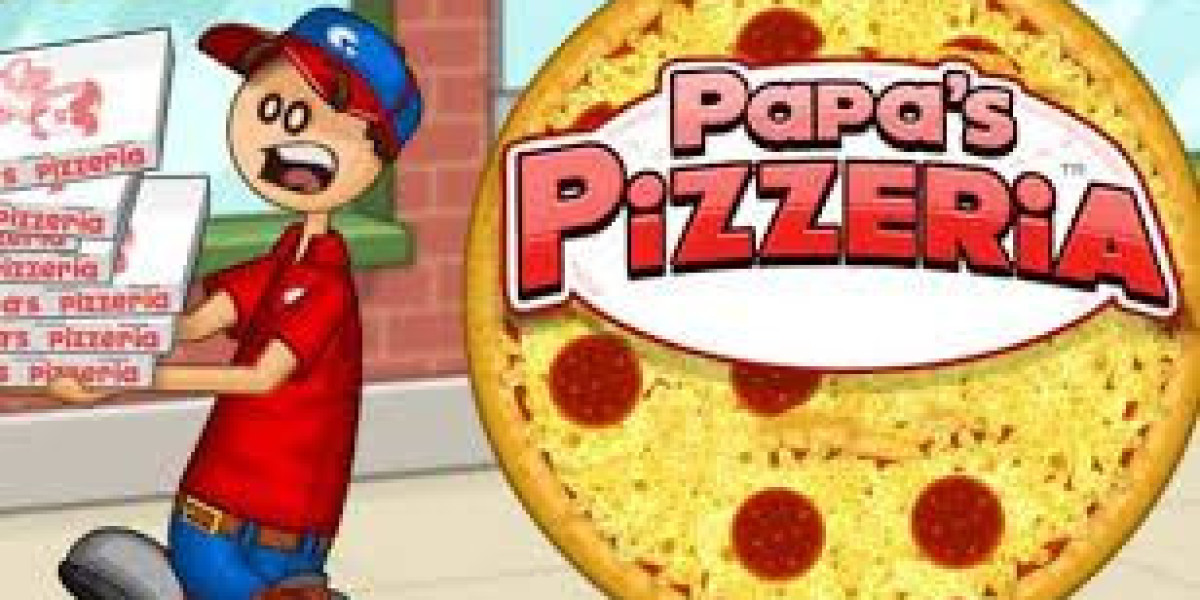

There’s a moment in Papa’s Pizzeria where everything starts slipping.
The oven is full. Orders are stacking. You meant to slice that pizza thirty seconds ago, but now it’s sitting there, slightly overbaked, while two more customers wait at the counter. You try to recover, but the rhythm is gone. Every decision feels a step too late.
Strangely, that’s part of why the game works so well.
It’s not just about mastering the system. It’s about what happens when you don’t.
The Inevitable Breakdown
No matter how careful you are, every player hits a breaking point.
At first, you can handle everything. One or two pizzas at a time, maybe three if you’re paying attention. But eventually, the game nudges you into situations where your usual approach doesn’t quite hold up.
You take one too many orders. You hesitate for a second too long. And suddenly, the balance tips.
What makes this interesting is that the game doesn’t feel unfair. You can usually trace the breakdown back to a small decision—a moment where you pushed your capacity just a little too far.
That’s what gives the chaos a sense of ownership. It’s not random. It’s yours.
Stress That Feels Earned
The pressure in Papa’s Pizzeria isn’t constant. It comes in waves.
There are calm moments where you’re ahead of everything, where pizzas are baking neatly and customers are spaced out. Then there are rushes, where everything overlaps and your attention gets pulled in multiple directions.
When things fall apart during those rushes, it feels different from failing in other games. You’re not blocked by a wall or defeated by an enemy. You’re overwhelmed by your own decisions.
And that kind of stress feels… fair.
It’s not punishing in a harsh way, but it’s enough to make you sit up a little straighter and try again with more awareness next time.
The Temptation to Overcommit
One of the easiest traps to fall into is taking on too much at once.
A new customer walks in, and it feels efficient to grab their order immediately. Then another arrives. And another. Before you know it, you’ve got a queue of tickets and not enough attention to handle them cleanly.
The game never forces you to overcommit. It just makes it tempting.
There’s always that thought: I can handle one more.
Sometimes you can. Sometimes that extra order is what pushes everything into chaos.
Learning where that limit is—and respecting it—is part of the skill the game quietly teaches.
Recovering from Mistakes
What keeps the experience from becoming frustrating is that recovery is always possible.
Even when things go wrong, the game gives you room to stabilize. You can refocus, prioritize, and slowly bring things back under control. A burnt pizza might hurt your score, but it doesn’t end the day.
That ability to recover changes how failure feels.
Instead of restarting or giving up, you adapt. You decide which orders to save, which ones to accept as imperfect, and how to prevent the next mistake from stacking on top of the last.
There’s a quiet satisfaction in that recovery process. Sometimes more than in a perfectly smooth run.
Control Is Always Temporary
One of the more subtle design choices in Papa’s Pizzeria is that control is never permanent.
Even when you’re playing well—timing everything perfectly, balancing orders smoothly—you’re only a few small decisions away from losing that balance.
That keeps the game engaging.
If control were absolute, the game would become predictable. If chaos were constant, it would become exhausting. Instead, it moves between the two.
You gain control, lose it, and gain it back again.
That cycle is where most of the interesting moments happen.
Why Imperfect Runs Feel More Real
Perfect runs are satisfying, but they’re also a bit forgettable.
Everything goes right, and the day ends cleanly. There’s not much to reflect on.
But imperfect runs—where things go slightly wrong and you have to adjust—stick with you longer. You remember the near-misses, the last-second saves, the moments where you almost lost everything but didn’t.
Those runs feel more dynamic. More human.
They turn the game from a checklist into an experience.
If you’ve ever thought about why these moments stand out, it connects to ideas like [why failure can enhance engagement] or [the appeal of recovering from mistakes in games].
The Balance Between Order and Chaos
At its heart, Papa’s Pizzeria is about managing a system that’s always on the edge of slipping.
You’re given clear rules and predictable mechanics, but the way they interact creates constant tension. You’re trying to maintain order in something that naturally leans toward disorder.
And you never fully solve that tension.
Even at your best, you’re managing it—not eliminating it.
Why We Keep Coming Back
There’s a reason players return to games like this, even after long breaks.
It’s not just the nostalgia or the simplicity. It’s the feeling of stepping back into that balance—testing how much you can handle, seeing how smoothly you can run things before they start to slip again.
Every session is a little different. Some days are clean and controlled. Others are messy and reactive.
Both are satisfying in their own way.