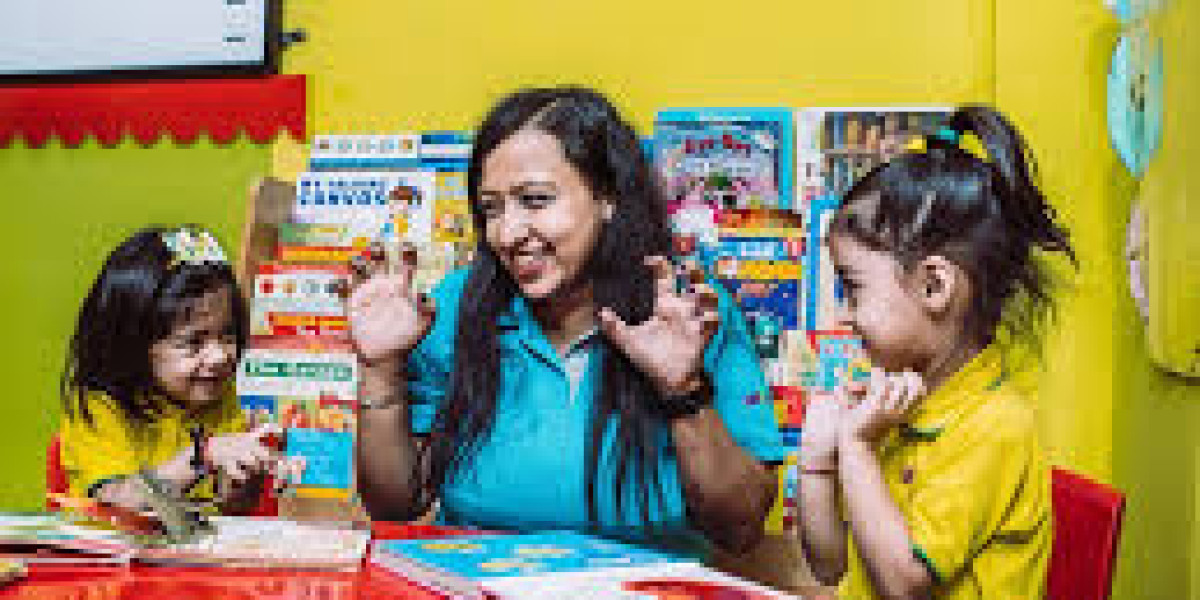

In early childhood education, the way teachers communicate with young learners has a powerful influence on how children see themselves, their abilities, and their capacity to learn. Language is not just a tool for instruction—it shapes beliefs. When teachers use language that promotes a growth mindset, children become more resilient, confident, and eager to explore new challenges.
We’ll also connect this research insight with practical steps for parents looking for quality early education—such as playgroup admission Indirapuram at Makoons Play School—and how a growth mindset approach shows up in the best early learning environments.
? Understanding Growth Mindset in Early Childhood
A growth mindset is the belief that intelligence and abilities can be developed with effort, time, and the right strategies. Coined by psychologist Carol Dweck, this concept has transformed modern education. When children believe they can get better through effort and learning, they take on challenges instead of avoiding them.
In contrast, a fixed mindset suggests that kids are “naturally smart” or “just not good at something,” which can limit their willingness to try new things or recover from difficulties.
Think about how differently children respond when a teacher says:
Fixed mindset: “You’re so smart—you got it right!”
Growth mindset: “You worked really hard to figure that out. Great job!”
The second message focuses on effort and strategy, not innate talent. This encourages persistence and resiliency—hallmarks of lifelong learning.
? Teacher Language: More Than Words
Teacher language includes everything educators say and how they say it:
✅ Praise That Promotes Growth
Teachers who emphasize effort, strategies, and progress help children internalize that growth is possible:
“I noticed how you tried different ways to solve that puzzle.”
“You kept going even when it was tricky—well done!”
“Let’s think together about what we could try next.”
❌ Language That Reinforces Fixed Beliefs
Even well-meaning praise can unintentionally create a fixed mindset:
“You’re so clever!”
“That was easy for you!”
“You’re just naturally good at that!”
This sounds positive—but children can interpret it to mean ability is static. When a task becomes harder, they may avoid trying.
What matters most is not eliminating praise, but shaping it to reinforce effort, persistence, and strategy use. This is especially vital in early childhood where neural pathways for learning and self-belief are rapidly developing.
? Teacher Language in Practice: Early Learning Settings
In early years classrooms—especially in playgroup and preschool environments—language plays a dual role:
Cognitive development
Through descriptive language, teachers help children make sense of experiences.Emotional and motivational development
Through encouragement, teachers build resilience and joy in learning.
For parents seeking quality preschool experiences, environments that emphasize language for growth mindset provide a powerful foundation for future academic and social success.
? Why Growth-Mindset Language Matters in Playgroups
Playgroup is often a child’s first formal educational experience. It’s where curiosity meets structure, and social skills begin to flourish. A growth-oriented environment:
Encourages children to experiment without fear of failure
Celebrates effort, curiosity, and individual progress
Helps children develop early confidence for school readiness
When teachers speak in ways that value trying, exploring, and learning from mistakes, even toddlers begin to associate learning with enjoyment rather than pressure.
? How Growth-Mindset Shows Up in the Best Preschools
If you’re exploring options like best preschool for admission in Indirapuram or actively considering preschool admission Indirapuram, it helps to know what a growth-mindset environment looks like in action:
?️ Language That Encourages Thinking
Teachers ask open-ended questions:
“What do you notice about how these pieces fit together?”
“How did you solve that?”
“What might happen if we try it this way?”
These prompts invite reflection, not just correct answers.
? Focus on "Process" Over "Product"
Instead of highlighting only final results, teachers celebrate:
Trying new things
Exploring materials without a prescribed outcome
Learning from mistakes
This strengthens children’s willingness to take healthy risks—a key part of learning.
? Emotionally Supportive Language
Teachers model empathy and emotional regulation:
“It’s okay to feel frustrated. Let’s breathe and try again.”
“I’m proud of how you kept going.”
This kind of language nurtures emotional intelligence alongside academic skills.
? A Growth Mindset Classroom & Playgroup Admission Indirapuram
For families seeking enriching early childhood environments, understanding how teachers communicate can make all the difference. At progressive schools like Makoons Play School in Indirapuram, play-based learning is paired with teacher interactions that support curiosity and persistence.
If you’re considering playgroup admission Indirapuram, this growth-mindset approach matters because:
Young children learn best when they feel safe and supported
Language that frames challenges positively builds resilience
Early confidence leads to stronger school readiness
? Choosing the Best Preschool for Growth Mindset Support
When you’re preparing for best preschool for admission in Indirapuram, here are key questions to ask during visits or conversations:
❓ What kind of language do teachers use with children?
Listen for phrases that highlight effort, thinking, and persistence.
❓ How do teachers respond to mistakes?
Do they focus on reassurance and strategies, or do they redirect immediately to the “right answer”?
❓ Are children encouraged to express ideas and ask questions?
Curiosity is a sign of a healthy growth mindset.
❓ Is play integrated into learning?
Play allows children to experiment, test hypotheses, and develop social skills organically.
If these elements resonate with you, a school like Makoons Play School may be a strong choice for your child’s early years. They emphasize holistic development through supportive language, engaged learning, and activity-rich classrooms.
⭐ Growth Mindset and Long-Term Student Outcomes
Teacher language in early years doesn’t just affect immediate behavior—it lays the foundation for long-term academic and personal growth:
? Improved Academic Confidence
Children learn to view effort as meaningful. They are more willing to:
Tackle challenging tasks
Stay engaged during learning activities
Persist when concepts are new or complex
? Strong Social Skills
Language that teaches empathy and collaboration supports healthy peer relationships.
? Lifelong Love of Learning
When learning is framed as a joyful process, children develop intrinsic motivation—and that deeply impacts future school success.
? Final Thoughts
Teacher language matters—especially in early learning environments like playgroups and preschools. When adults focus on effort, strategy, and curiosity, children absorb not only academic concepts, but how to learn and who they can become.
For parents navigating early education choices, focusing on growth-mindset communication can help you choose a setting where your child thrives emotionally, socially, and academically.
If you’re exploring play school admission Indirapuram, consider environments like Makoons Play School, where supportive teacher language and child-centered learning come together: