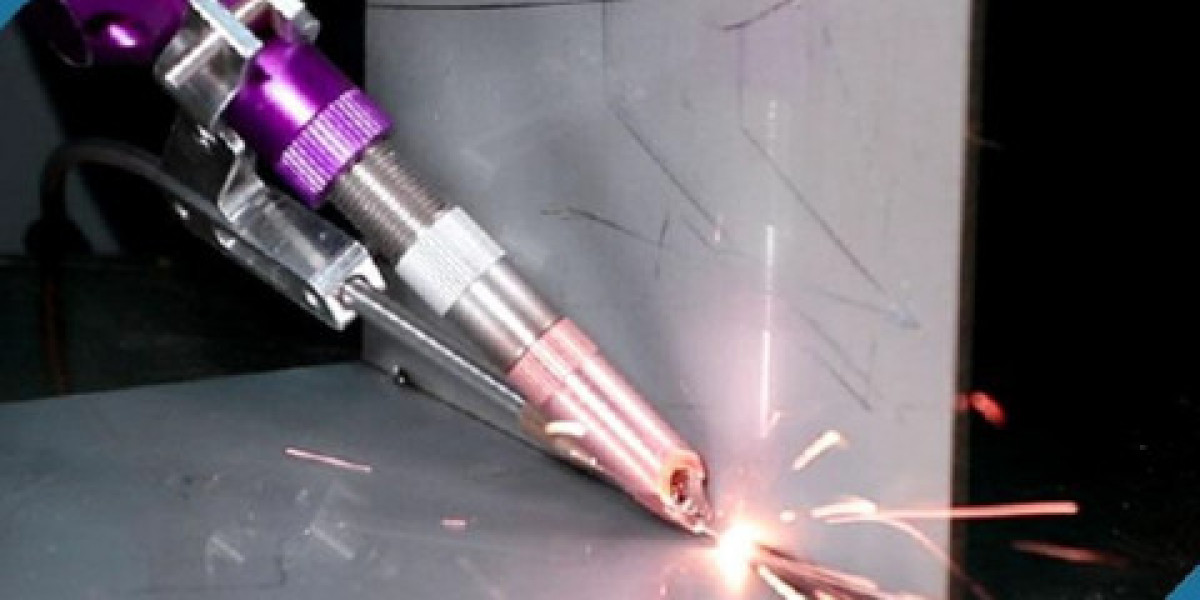

Fiber laser welding has become a defining force in modern manufacturing, shaping how industries join metals with speed, consistency, and exceptional control. This welding method relies on a highly focused laser beam delivered through an optical fiber, allowing energy to be applied exactly where it is needed. As production environments continue to demand cleaner joints, tighter tolerances, and adaptable processes, fiber laser welding has established itself as a trusted solution across a wide range of sectors.
At its core, fiber laser welding is a fusion process where a concentrated laser beam melts the base materials along a joint line, forming a strong metallurgical bond upon cooling. The laser source is generated within an optical fiber doped with rare-earth elements, which produces a stable and controllable beam. This beam is guided through flexible fiber optics to the welding head, making it suitable for complex geometries and hard-to-reach areas. The ability to precisely manage heat input allows manufacturers to work with thin foils, delicate assemblies, and dense structural components using the same fundamental process.
The role of fiber laser welding in industrial automation cannot be overstated. It integrates seamlessly with robotic systems, CNC platforms, and automated production lines. Manufacturers rely on this process to maintain consistent weld quality across high-volume production runs. In automotive manufacturing, for example, fiber laser welding is commonly used for body-in-white assemblies, battery enclosures, transmission components, and tailored blanks. The repeatability of the process supports strict quality standards while accommodating rapid cycle times demanded by modern factories.
Material versatility is another reason fiber laser welding has gained widespread adoption. It is used to join stainless steel, carbon steel, aluminum, titanium, nickel alloys, copper, and a variety of dissimilar metal combinations. This flexibility supports innovation in product design, enabling engineers to select materials based on performance requirements rather than joining limitations. In electronics manufacturing, fiber laser welding is applied to delicate conductive components, sensor housings, and micro-scale assemblies where precision is essential.
In the medical device industry, fiber laser welding plays a vital role in producing components that demand cleanliness and accuracy. Surgical instruments, implantable devices, and diagnostic equipment often feature small, intricate welds that must meet strict regulatory standards. The controlled nature of fiber laser welding supports these requirements by producing uniform seams with minimal spatter and distortion. The process is well suited for cleanroom environments and aligns with the high standards expected in healthcare manufacturing.
Aerospace and defense applications also rely heavily on fiber laser welding. Aircraft structures, turbine components, fuel systems, and lightweight assemblies benefit from the process’s ability to create consistent joints in high-performance alloys. The precise energy delivery allows engineers to maintain material integrity while meeting demanding specifications. Fiber laser welding supports both prototype development and full-scale production, making it valuable throughout the product lifecycle.
The process parameters involved in fiber laser welding are carefully controlled to achieve desired results. Laser power, welding speed, focal position, beam diameter, and shielding gas selection all influence the final weld quality. Skilled technicians and engineers adjust these variables based on material type, thickness, joint design, and production goals. This level of control allows fiber laser welding to adapt to a wide variety of manufacturing scenarios without altering the fundamental equipment layout.
Joint design plays a significant role in fiber laser welding applications. Butt joints, lap joints, fillet joints, and edge joints are commonly used, each requiring specific parameter adjustments. The focused laser beam allows for narrow weld seams, which supports compact designs and efficient use of materials. Manufacturers often incorporate fiber laser welding early in the design phase to optimize part geometry and streamline assembly processes.
Quality assurance is a central aspect of fiber laser welding operations. Manufacturers employ real-time monitoring systems, vision inspection, and non-destructive testing methods to verify weld integrity. Process stability enables consistent results, reducing variability across production batches. Documentation and traceability are often built into fiber laser welding systems, supporting compliance with industry standards and customer requirements.
The adoption of fiber laser welding is also influenced by its compatibility with modern digital manufacturing strategies. Data collection, process monitoring, and system diagnostics are commonly integrated into production environments. These capabilities support predictive maintenance, process optimization, and continuous improvement initiatives. As factories move toward smarter manufacturing models, fiber laser welding aligns well with connected and data-driven workflows.
From a production planning perspective, fiber laser welding supports flexible manufacturing. Changeovers between different products or materials can be managed through parameter adjustments rather than extensive tooling changes. This adaptability is particularly valuable for contract manufacturers and companies serving diverse markets. The same welding platform can be used for short production runs, custom components, or large-scale manufacturing programs.
Safety considerations are an important part of fiber laser welding implementation. Laser enclosures, interlock systems, protective eyewear, and proper training are standard elements of a responsible operation. Manufacturers establish clear protocols to protect operators while maintaining efficient production flow. These measures ensure that fiber laser welding can be used confidently in both manual and automated environments.
Maintenance and long-term reliability are also part of the discussion around fiber laser welding. The solid-state design of fiber laser sources supports stable performance over extended operating periods. Routine maintenance typically focuses on optics, cooling systems, and motion components. Well-maintained systems contribute to consistent output and predictable production schedules, which are critical in competitive manufacturing sectors.
Across global markets, fiber laser welding continues to shape how products are designed and assembled. From consumer goods and industrial equipment to energy systems and transportation infrastructure, the process supports innovation by enabling precise, repeatable, and scalable joining solutions. Manufacturers that adopt fiber laser welding often align their production capabilities with evolving market demands, positioning themselves for growth and technological advancement.
The presence of fiber laser welding in research and development environments further highlights its importance. Engineers and product developers use the process to test new materials, explore advanced joint configurations, and refine manufacturing techniques. The insights gained during development stages often translate directly into efficient production strategies, reinforcing the role of fiber laser welding as both a creative and industrial tool.
As industries continue to push the boundaries of performance, efficiency, and design freedom, Fiber laser welding remains a central element in modern manufacturing narratives. Its ability to support precision, adaptability, and high-quality output makes it an integral part of contemporary production ecosystems, influencing how products are built today and how manufacturing will evolve in the years ahead.