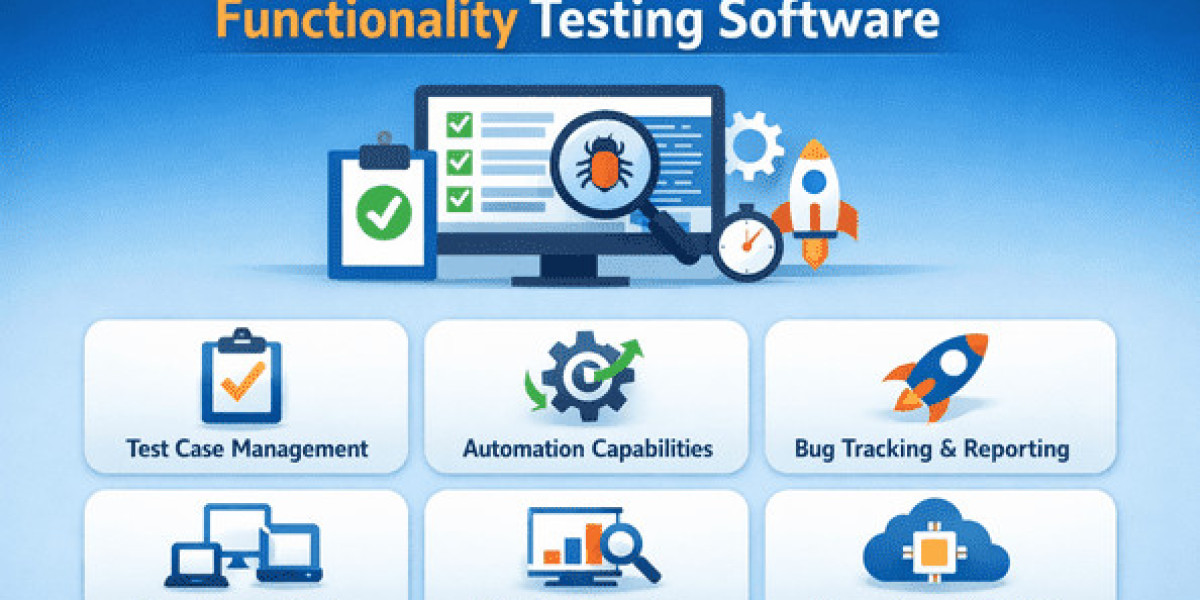

Modern applications are built around features that directly impact revenue, user trust, and operational stability. Payment flows, authentication, order processing, data integrity, and compliance-related logic are not just technical components. They are business-critical features.
Functionality testing software plays a central role in ensuring these features work as expected, even as systems evolve rapidly. In fast-moving development environments, manual checks and ad hoc testing are no longer enough to protect core business behavior.
This article explains how functionality testing software helps teams validate critical features, reduce risk, and maintain confidence across frequent releases.
What Makes a Feature Business-Critical
Business-critical features are those whose failure has immediate and measurable impact. These typically include:
User authentication and authorization
Payment and billing workflows
Order placement and fulfillment
Data creation, updates, and consistency
Integrations with external systems
Compliance and audit-related logic
Failures in these areas do not just create bugs. They create outages, revenue loss, and customer dissatisfaction. Ensuring their correctness requires more than basic test coverage.
The Role of Functionality Testing Software
Functionality testing software focuses on validating that an application behaves according to functional requirements. It checks whether inputs produce the expected outputs and whether workflows behave correctly under different conditions.
Unlike performance or security tools, functionality testing software answers a fundamental question:
Does the system do what the business expects it to do?
For business-critical features, this validation must be repeatable, reliable, and automated.
Validating Core Business Logic Consistently
Business logic often spans multiple layers of an application. A single feature may involve APIs, databases, external services, and background jobs.
Functionality testing software helps by:
Validating end-to-end workflows from input to outcome
Ensuring business rules are applied consistently
Catching edge cases that manual testing often misses
Verifying behavior across different data conditions
This consistency is especially important when teams refactor code, add new features, or upgrade dependencies.
Preventing Regressions in Critical Features
One of the biggest risks in fast-paced development is regression. A small change intended to improve one area can unintentionally break another.
Functionality testing software reduces this risk by:
Re-running functional tests on every change
Ensuring previously working features still behave correctly
Providing fast feedback when behavior deviates
For business-critical features, regression testing is not optional. It is a safeguard that protects both users and the business.
Supporting CI/CD and Frequent Releases
Modern teams deploy frequently. Some deploy multiple times a day. In this environment, there is no room for manual verification of critical features before every release.
Functionality testing software integrates into CI/CD pipelines to:
Automatically validate key workflows on each build
Block releases when critical functionality breaks
Provide confidence to deploy without manual sign-offs
This automation allows teams to move fast without sacrificing reliability.
Testing Beyond the Happy Path
Business-critical features rarely fail in ideal conditions. They fail at boundaries, under unexpected inputs, or during partial failures.
Effective functionality testing software supports:
Negative testing and error scenarios
Validation of edge cases and boundary conditions
Testing of fallback and recovery behavior
By validating both expected and unexpected scenarios, teams reduce the risk of production incidents.
Maintaining Confidence During Change
Applications constantly change. Requirements evolve, integrations update, and systems scale.
Functionality testing software provides a stable reference point during change. It ensures that even as implementations shift, business behavior remains intact.
This is especially valuable for:
Legacy system modernization
Migration to microservices
API versioning and contract evolution
Feature rollouts and refactoring
Teams can change how things work internally without breaking what matters externally.
Reducing Dependency on Manual Testing
Manual testing is valuable but does not scale for critical workflows that must be validated repeatedly.
Functionality testing software reduces reliance on manual checks by:
Automating repetitive validation
Providing consistent results
Freeing testers to focus on exploratory and risk-based testing
This balance improves both speed and quality.
Choosing the Right Level of Functional Validation
Not every feature needs the same level of testing. Business-critical features deserve the highest level of functional validation.
Teams often prioritize functionality testing software for:
Revenue-impacting flows
User access and security-related features
Core data operations
Regulatory and compliance requirements
By focusing automation where risk is highest, teams get maximum value from their test suites.
Final Thoughts
Business-critical features define the success or failure of an application. As systems grow more complex and release cycles accelerate, protecting these features becomes harder, not easier.
Functionality testing software ensures that core business behavior remains correct, consistent, and reliable, even as everything else changes. It enables teams to move fast while staying aligned with business expectations.
In modern software delivery, functionality testing software is not just a QA tool. It is a business safeguard.