
Introduction
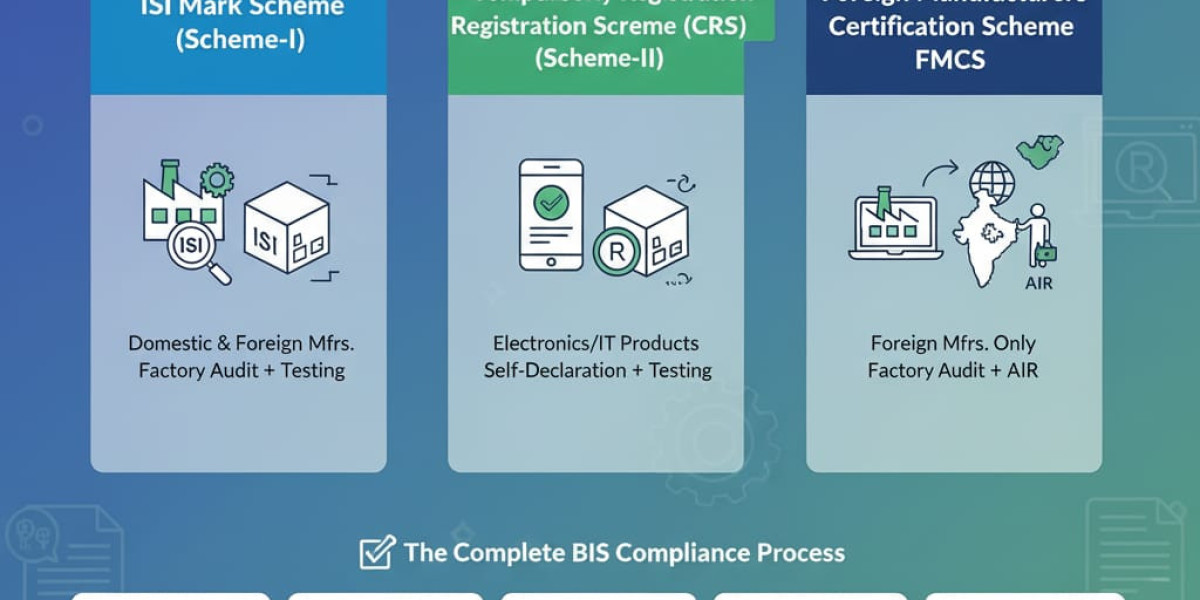
BIS FMCS stands for Foreign Manufacturers Certification Scheme, a specialized certification system introduced by the Bureau of Indian Standards (BIS). This scheme is designed to ensure that products manufactured outside India meet the same quality, safety, and performance standards as products manufactured within the country.
For any foreign company planning to export or sell regulated products in India, BIS FMCS compliance is mandatory. Without this certification, foreign-made products listed under compulsory BIS standards cannot legally enter the Indian market.
What is BIS FMCS?
BIS FMCS is a certification framework under which BIS grants approval to foreign manufacturers to use the ISI Mark on their products. The certification confirms that the manufacturing process, testing facilities, and product quality conform to applicable Indian Standards (IS).
Unlike domestic certification, BIS FMCS places full responsibility on the foreign manufacturing unit rather than the Indian importer or distributor.
What is a BIS FMCS Certificate?
A BIS FMCS Certificate is an official license issued by the Bureau of Indian Standards after successful product testing and factory inspection. This certificate authorizes foreign manufacturers to produce and sell BIS-certified products in India.
The certificate proves that:
The product complies with Indian Standards
Quality control systems are properly implemented
BIS has inspected and approved the foreign manufacturing facility
BIS License for Foreign Manufacturer – Who Needs It?
A BIS License for Foreign Manufacturer is required when:
The product is manufactured outside India
The product falls under mandatory BIS certification
The manufacturer wants to import or distribute products in India
Foreign manufacturers cannot sell regulated products in India without obtaining this license, regardless of whether they have an Indian importer.
BIS Certification for Foreign Manufacturer – Key Requirements
To obtain BIS Certification for Foreign Manufacturer, companies must fulfill several mandatory conditions:
Compliance with relevant Indian Standards
Appointment of an Authorized Indian Representative (AIR)
Availability of quality control and testing facilities
Submission of complete technical documentation
Factory inspection by BIS officials
These requirements ensure consistent product quality and regulatory compliance.
BIS Registration for Foreign Manufacturer – Overview
BIS Registration for Foreign Manufacturer under the FMCS scheme differs from domestic registration. The foreign manufacturer must directly apply to BIS and is responsible for maintaining compliance.
Key aspects include:
Direct interaction with BIS authorities
Regular surveillance and inspections
Responsibility for product quality and conformity
This approach ensures accountability and transparency.
BIS FMCS Certification Process – Step-by-Step
The BIS FMCS certification process involves multiple structured stages:
Step 1: Identification of Applicable Indian Standard
Determine the specific IS standard applicable to the product.
Step 2: Appointment of Authorized Indian Representative (AIR)
AIR acts as a liaison between BIS and the foreign manufacturer.
Step 3: Application Submission
Submit the BIS FMCS application along with all required documents.
Step 4: Product Testing
Product samples are tested in BIS-recognized laboratories to verify compliance.
Step 5: Factory Inspection
BIS officials visit the foreign manufacturing unit to assess:
Production process
Quality control systems
Testing facilities
Step 6: Grant of BIS FMCS Certificate
Upon successful completion, BIS issues the FMCS Certificate.
Documents Required for BIS FMCS Certification
Proper documentation is crucial for approval. Commonly required documents include:
Manufacturing unit registration certificate
Factory layout and machinery list
Product specifications and drawings
Quality control and testing procedures
Test reports from approved laboratories
AIR authorization letter
Trademark registration (if applicable)
Incomplete or incorrect documents may delay certification.
Validity and Renewal of BIS FMCS Certificate
A BIS FMCS Certificate is generally valid for one to two years. To continue selling products in India, manufacturers must apply for renewal before expiry.
Renewal depends on:
Continued compliance with Indian Standards
Successful surveillance inspections
Timely submission of renewal fees
Failure to renew may result in suspension or cancellation of the license.
Benefits of BIS FMCS Certification
Obtaining BIS FMCS certification offers several benefits:
Legal access to the Indian market
Increased trust among Indian consumers
Better acceptance by distributors and government buyers
Protection from regulatory penalties
Long-term business growth in India
Challenges Faced by Foreign Manufacturers
Foreign manufacturers often face challenges such as:
Understanding Indian regulatory requirements
Managing factory inspections
Coordinating product testing
Handling documentation and communication with BIS
Professional guidance can help overcome these challenges efficiently.
Conclusion
BIS FMCS plays a critical role in ensuring that foreign-manufactured products meet Indian quality and safety standards. From obtaining a BIS FMCS Certificate to securing a BIS License and completing BIS Registration for Foreign Manufacturer, each step must be carefully managed.
With proper planning and expert support, foreign manufacturers can achieve BIS compliance smoothly and build a strong presence in the Indian market.
Looking for Expert Support for BIS FMCS Certification?
If you need professional assistance with BIS FMCS Certification, BIS License for Foreign Manufacturer, BIS Registration, documentation, inspections, and approvals, expert consultancy can simplify the entire process.