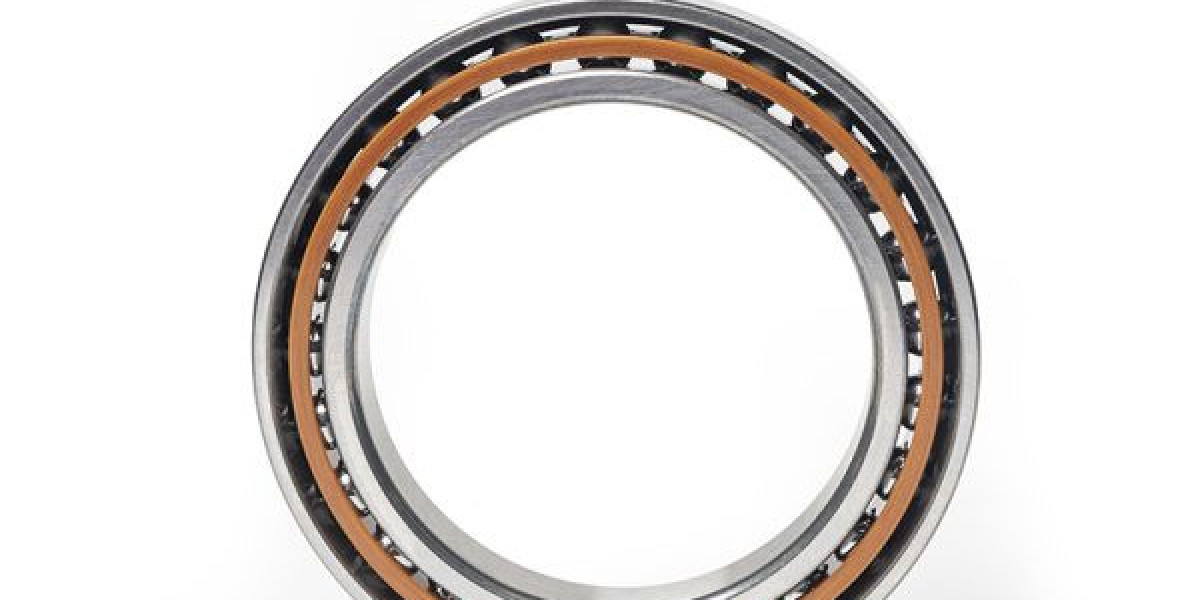

Industrial machines depend on many small components to work smoothly. One of the most important parts inside rotating equipment is the Angular Contact Bearing. Even though it is small in size, it plays a big role in machine stability, speed, and load handling.
When the wrong bearing is used, machines often face vibration, overheating, and unexpected breakdowns. These issues can slow down production and increase maintenance costs. Many industries today are realizing that choosing the right angular contact bearing is essential for keeping equipment reliable and efficient.
This article explains why machines fail when the wrong bearing is used and why high-quality angular contact bearings are critical for modern industrial applications.
The Critical Role of Bearings in Industrial Equipment
In any rotating machine, bearings help reduce friction between moving parts. They allow shafts and rotating components to move smoothly while carrying heavy loads.
However, not all bearings are designed for the same purpose. Some bearings handle radial loads, while others are designed to support axial loads or combined loads.
The Angular Contact Bearing is specially designed to support both radial and axial loads at the same time. Because of this unique design, it is widely used in high-speed machines and precision equipment.
Industries such as automotive manufacturing, robotics, machine tools, pumps, and turbines rely on angular contact bearings to maintain stable and accurate rotation.
Why the Wrong Bearing Causes Machine Problems
Many machine failures occur when the wrong type of bearing is installed or when the bearing quality is poor. Since angular contact bearings are designed for specific load directions and speeds, using an incorrect bearing can lead to serious issues.
One common problem is excessive vibration. When a bearing cannot properly support the load, the rotating parts become unstable. This instability spreads through the machine and affects other components.
Another issue is overheating. Poor bearing design or incorrect load distribution increases friction inside the bearing. As friction increases, heat builds up, which reduces the bearing’s lifespan and damages surrounding parts.
These problems often lead to unexpected downtime and costly equipment repairs.
High-Speed Machines Need High Precision
Modern industrial equipment operates at very high speeds. In these conditions, even a small defect in a bearing can cause serious performance problems.
High-speed machines require bearings that are carefully engineered for precision and balance. The Angular Contact Bearing is designed with a specific contact angle that allows it to support combined loads while maintaining smooth rotation.
Because of this design, angular contact bearings are commonly used in:
CNC machine spindles
Electric motors
Industrial pumps
Gearboxes
Automotive systems
In these applications, precision is extremely important. A poorly designed bearing can reduce machine accuracy and create alignment issues.
The Impact of Bearing Failure on Production
When a bearing fails, the problem rarely stays limited to one component. Instead, it often damages other parts of the machine.
For example, a worn bearing may cause shaft misalignment. This misalignment increases stress on gears, seals, and housings. Over time, multiple components begin to fail.
This chain reaction can stop production entirely. In industries that rely on continuous operation, even a few hours of downtime can lead to significant financial losses.
This is why many companies focus on using high-quality angular contact bearings that are designed for durability and long service life.
Material Quality and Engineering Matter
The performance of any bearing depends heavily on the materials and manufacturing process used to produce it.
High-quality angular contact bearings are made from strong bearing steel and are manufactured with strict precision standards. Advanced grinding and finishing processes help create smooth surfaces that reduce friction and wear.
Proper engineering also ensures that the bearing can handle heavy loads while maintaining stability at high speeds.
When these factors are carefully controlled, the Angular Contact Bearing becomes a reliable component that supports long-term machine performance.
Why Industries Prioritize Reliable Bearings
Industrial companies are increasingly focusing on equipment reliability and efficiency. Bearings may represent a small part of the total machine cost, but they have a huge impact on machine performance.
Using high-quality angular contact bearings helps businesses achieve several benefits:
Reduced machine vibration
Improved rotational accuracy
Longer equipment lifespan
Lower maintenance costs
Greater production stability
By investing in reliable bearing technology, companies can prevent many common mechanical failures and improve overall productivity.
Conclusion
Machines depend on precise and reliable components to operate efficiently. The Angular Contact Bearing is one of the most important elements in many high-speed and high-load applications.
When the wrong bearing is used or when bearing quality is poor, machines often experience vibration, overheating, and premature failure. These problems lead to costly downtime and reduced productivity.
Choosing the right angular contact bearing ensures smoother operation, improved machine stability, and longer equipment life. In modern industry, the reliability of rotating equipment often begins with the quality of the bearing itself.