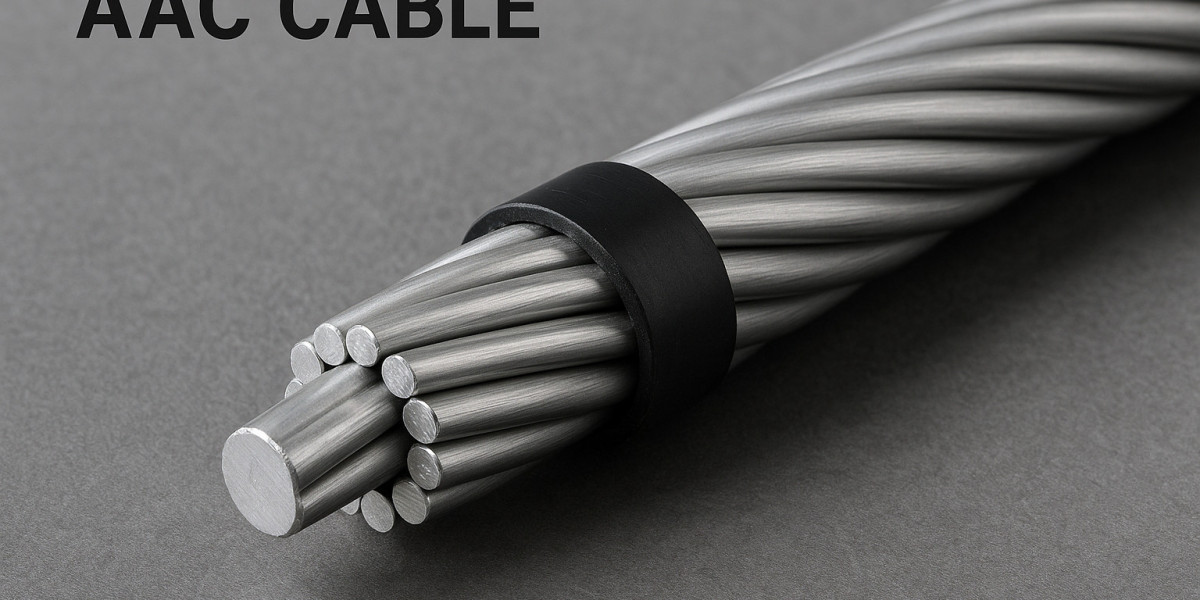

In today’s fast-evolving power industry, selecting the right conductor is critical for efficiency, reliability, and long-term infrastructure performance. Among the various overhead conductors available, AAC cable (All Aluminum Conductor) stands out as a dependable choice for power utilities, EPC contractors, and industrial projects worldwide. HNBF Power, a global leader in overhead conductor manufacturing, provides premium AAC cables engineered to meet the most stringent technical standardsand project requirements.
What is AAC Cable?
AAC cable, or All Aluminum Conductor, is a type of overhead power conductor made entirely of high-purity aluminum strands. Unlike ACSR (Aluminum Conductor Steel Reinforced), AAC does not include a steel core, making it lightweight and highly corrosion-resistant. Its primary application is in low- and medium-voltage transmission and distribution networks, where mechanical strength requirements are moderate, and electrical conductivity is a priority.
The key characteristics of AAC cables include:
Excellent electrical conductivity for efficient power transmission
Lightweight design for easy installation and reduced tower load
High resistance to corrosion, making it ideal for urban and coastal environments
Compatibility with standard overhead line fittings and hardware
HNBF Power ensures that each AAC conductor is manufactured using advanced extrusion and stranding techniques, delivering consistent quality and performance across all batches.
Advantages of Using AAC Cable
Choosing the right conductor can significantly impact operational efficiency and maintenance costs. Here’s why AAC cable is preferred for many utility projects:
1. Superior Electrical Performance
AAC cables provide excellent electrical conductivity due to the use of high-purity aluminum. This ensures minimal energy loss over long distances and maintains stable voltage levels in power distribution networks.
2. Lightweight and Flexible
The absence of a steel core makes AAC cables lighter than ACSR or AAAC alternatives. This reduces stress on towers and poles, simplifies handling, and lowers installation costs.
3. Corrosion Resistance
AAC is inherently resistant to rust and environmental degradation. This makes it a reliable choice for regions with high humidity, pollution, or coastal exposure.
4. Cost-Effective Solution
With simpler manufacturing processes and the absence of expensive steel reinforcement, AAC cables offer an affordable option for urban and rural distribution systems without compromising on quality.
Applications of AAC Cable
AAC cables are widely used in electricity distribution and transmission. Some common applications include:
Urban and rural power distribution networks
Overhead lines for medium-voltage systems
Temporary power supply projects
Infrastructure projects requiring lightweight conductors
HNBF Power’s AAC cables are engineered to meet both domestic and international standards, ensuring reliability for a wide range of engineering projects.
HNBF Power: Delivering Quality AAC Cables Globally
As a trusted AAC cable manufacturer, HNBF Power combines cutting-edge manufacturing technology with rigorous quality control to provide superior overhead conductors. Key aspects of HNBF Power’s offerings include:
High-purity aluminum sourced from trusted suppliers
Precision stranding technology for uniform mechanical and electrical performance
Custom sizing and specifications to meet specific project needs
Global logistics support for timely delivery
By prioritizing quality, safety, and compliance, HNBF Power ensures that every AAC cable delivered enhances the performance and longevity of your power systems.
Frequently Asked Questions (FAQs)
Q1: What is the difference between AAC and ACSR cables?
A: AAC is made entirely of aluminum and is lighter, with excellent corrosion resistance. ACSR includes a steel core, offering higher tensile strength but lower flexibility.
Q2: Can AAC cables be used in coastal areas?
A: Yes, AAC cables are highly resistant to corrosion, making them ideal for coastal or humid environments.
Q3: What voltage levels are suitable for AAC cables?
A: AAC cables are commonly used in low- and medium-voltage transmission and distribution networks.
Q4: Does HNBF Power offer customized AAC cable solutions?
A: Yes, HNBF Power can provide AAC cables in various sizes and specifications to meet unique project requirements.
Q5: How does the installation of AAC cables compare to other conductors?
A: AAC cables are lightweight and flexible, simplifying installation and reducing overall labor and infrastructure costs.
Conclusion: Reliable AAC Cable Solutions for Your Projects
Selecting the right conductor is crucial for maintaining a reliable and efficient power network. With HNBF Power’s high-quality AAC cables, engineers, project managers, and procurement teams can ensure safe, cost-effective, and long-lasting solutions for overhead transmission and distribution systems.
Contact HNBF Power today to discuss your project requirements and receive tailored AAC cable solutions designed to meet your exact specifications.